S Power Portable S50 Line Boring Machine Bucket Ear Plate Bores
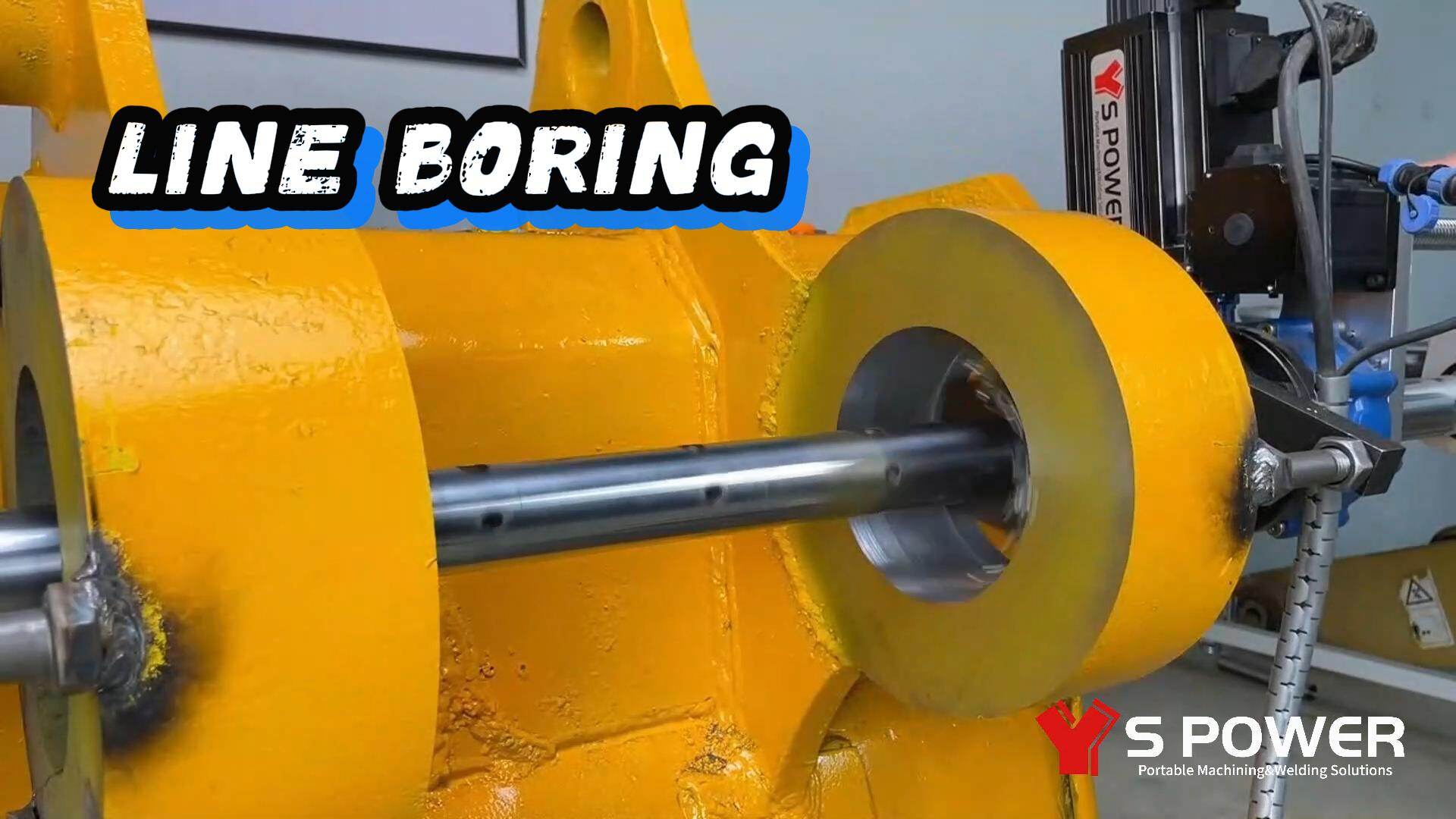
Two plates, one axis
A bucket hangs on a pin that passes through two ear plates. The pin does not care that the plates are separate parts: it needs both bores on one axis, at one size. That single requirement governs the whole repair sequence, and it is the reason bucket work differs from an arm joint.
Where buckets wear
Digging load pushes the pin against the bores in one direction, and the plates take that load unevenly. The result is usually an oval bore in one plate and a less worn bore in the other, plus a pin that has taken the shape of the wear. Grease passages are often blocked by the time the play is noticed, which is part of why the wear reached this point.
Welding without pulling the plates apart
Build-up welding restores the worn surface to slightly above finished size. Heat is the risk: a plate that is welded hard on one side pulls and the two bores drift out of line. The deposit is therefore laid in stages, alternating between the plates, and the assembly is left to cool before any cutting starts.
One bar through both
Boring the two plates in one setup is what guarantees coaxiality. The bar is carried in bearing mounts outside the plates and cuts through both bores without being reset in between, so the second bore is a continuation of the first rather than an independent hole that happens to be close. Resetting between plates is where most bucket repairs lose their alignment.
Pin fit and the final check
The finished bores are checked with the pin itself: it should slide through both plates by hand and show no rock once in place. Where the design uses bushings, the bores are cut to the bushing seat size and the bushings pressed afterwards, so the wear part stays replaceable.
What to check before the bucket leaves
Pin fit in both plates, grease passages clear, no weld spatter left inside the bores, and the plates free of cracks at the weld toe. A bucket that goes back to work with a blocked grease hole will be back in the shop with the same wear in a shorter time.
Related: what to inspect before an arm bore repair.
Why not just fit a bigger pin
Oversize pins exist, but they move the problem into the plates rather than solving it: once a bore has been opened to a non-standard size, the next repair has nowhere left to go. Cutting to the standard fit keeps the joint serviceable for the working life of the bucket.