S Power Portable Lathe PL50 Wheel Bucket Shaft at Sand Plant
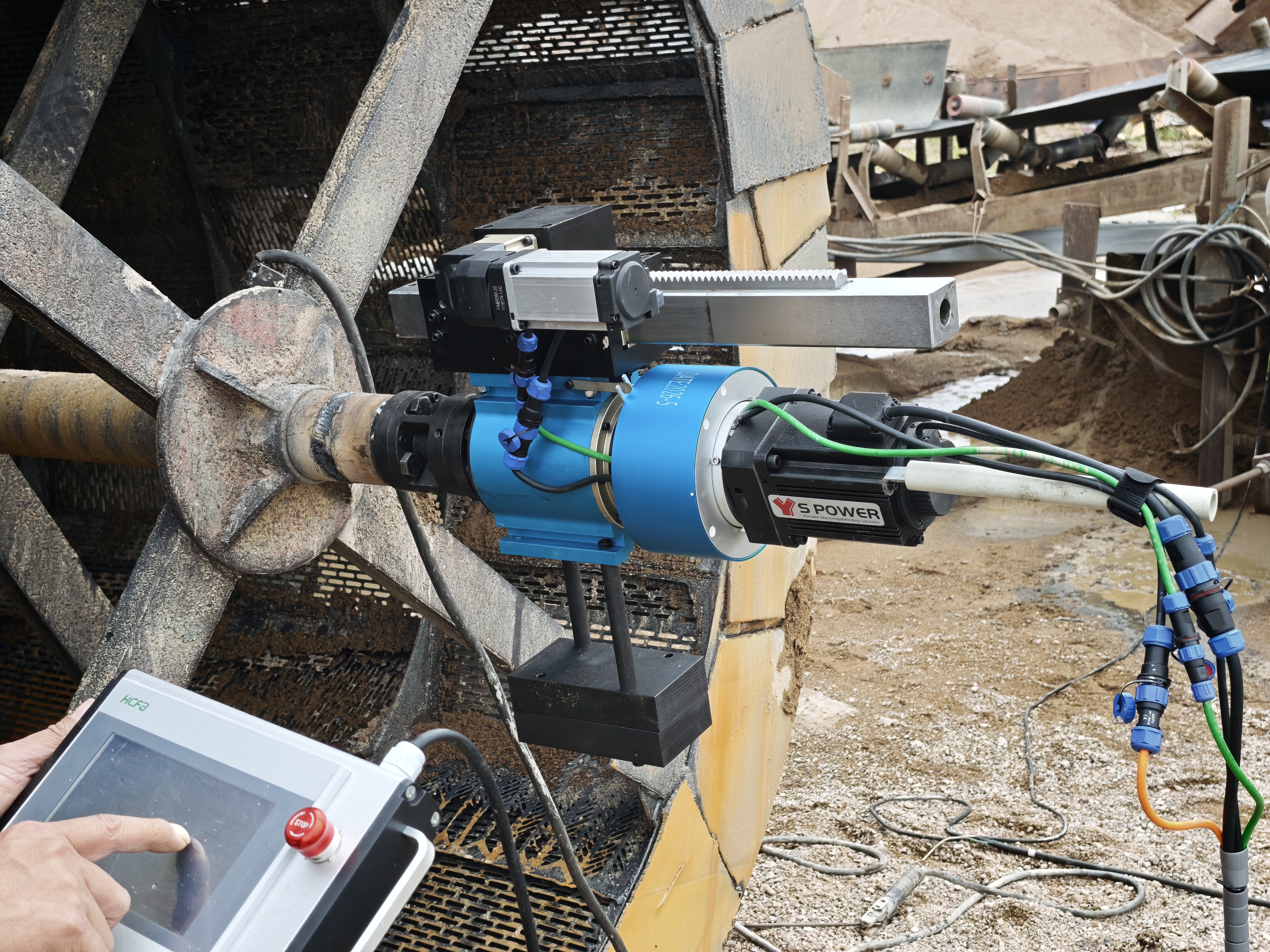
The situation in the sand yard
A wheel bucket machine at a sand plant had a worn shaft. The handling duty is constant, the shaft sits deep in the assembly, and the machine is one link in a line that has to keep running. The usual route, taking the unit out and sending the shaft to a repair shop, would have cost far more time than the repair itself.
Why the machine stayed where it was
The damage was confined to the shaft surface, not to the frame and not to the way the bearings seat. That is the condition that makes an in-place repair worth examining: if the shaft can be reached and the wear is a surface problem, the work can travel to the machine instead of the machine travelling to the work.
Set-up on the wheel bucket shaft
The lathe was fixed to the shaft and positioned so the tool could reach the worn band without the surrounding structure getting in the way. Mounting is the step that decides everything afterwards, so it is done slowly: the unit is seated, checked for true running and confirmed against the shaft before any cut is taken.
Cutting under touch-screen control
The operators ran the machine from a touch screen, setting the passes and watching the old worn surface come off. Working in light passes kept the tool load steady and left room to measure between cuts, so the shaft was brought back to size in a controlled sequence rather than in one heavy pass.
What the crew avoided
No teardown of the wheel bucket machine, no lifting, no transport to a workshop and no reassembly with a fresh alignment afterwards. Those steps are the expensive part of shaft repair and they are where most of the downtime sits. Skipping them is what turned a long job into a short one and let the machine go back into the sand line.
Is your plant a candidate?
The same approach applies where the shaft is accessible, the wear sits on a machinable surface and the machine is too costly to strip. Where the shaft is bent, cracked or out of reach, the work belongs in a workshop instead.
Why touch-screen control helps on a repair like this
The operator sets the passes and the feed from the screen rather than from a handwheel at the tool, so the person watching the cut is also the person steering it. On a sand yard that matters in practice: the cut can be adjusted while it is running instead of being stopped, re-set and started again.