Overlay Welding and Turning in One On-Site Setup
Two repairs that usually happen in two places
A scored journal cannot simply be turned down: removing the damaged material takes the shaft below the size the bearing needs. The worn band first has to be rebuilt, and only then can it be cut back to dimension. In a workshop those two operations are separate stops. On site, with the PL50 mounted on the shaft, they run as one repair.
Step one: put material back
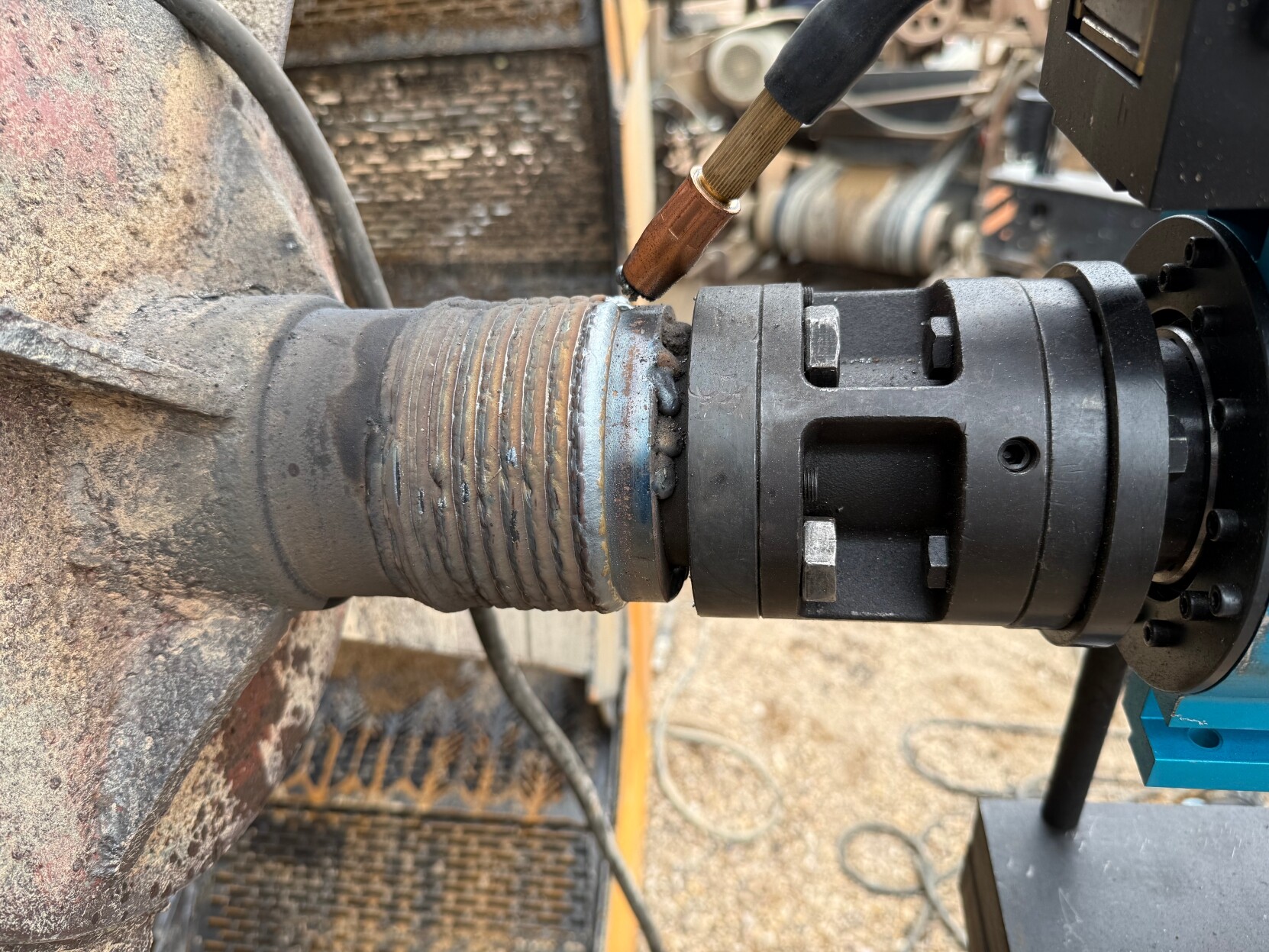
Overlay welding deposits new metal over the worn band. The surface is built slightly proud of the finished size, which gives the cutting pass something to remove. Because the torch and the cutting tool work on the same shaft, the part is not handed over to anyone between the two steps.
Step two: cut the built-up surface back to size
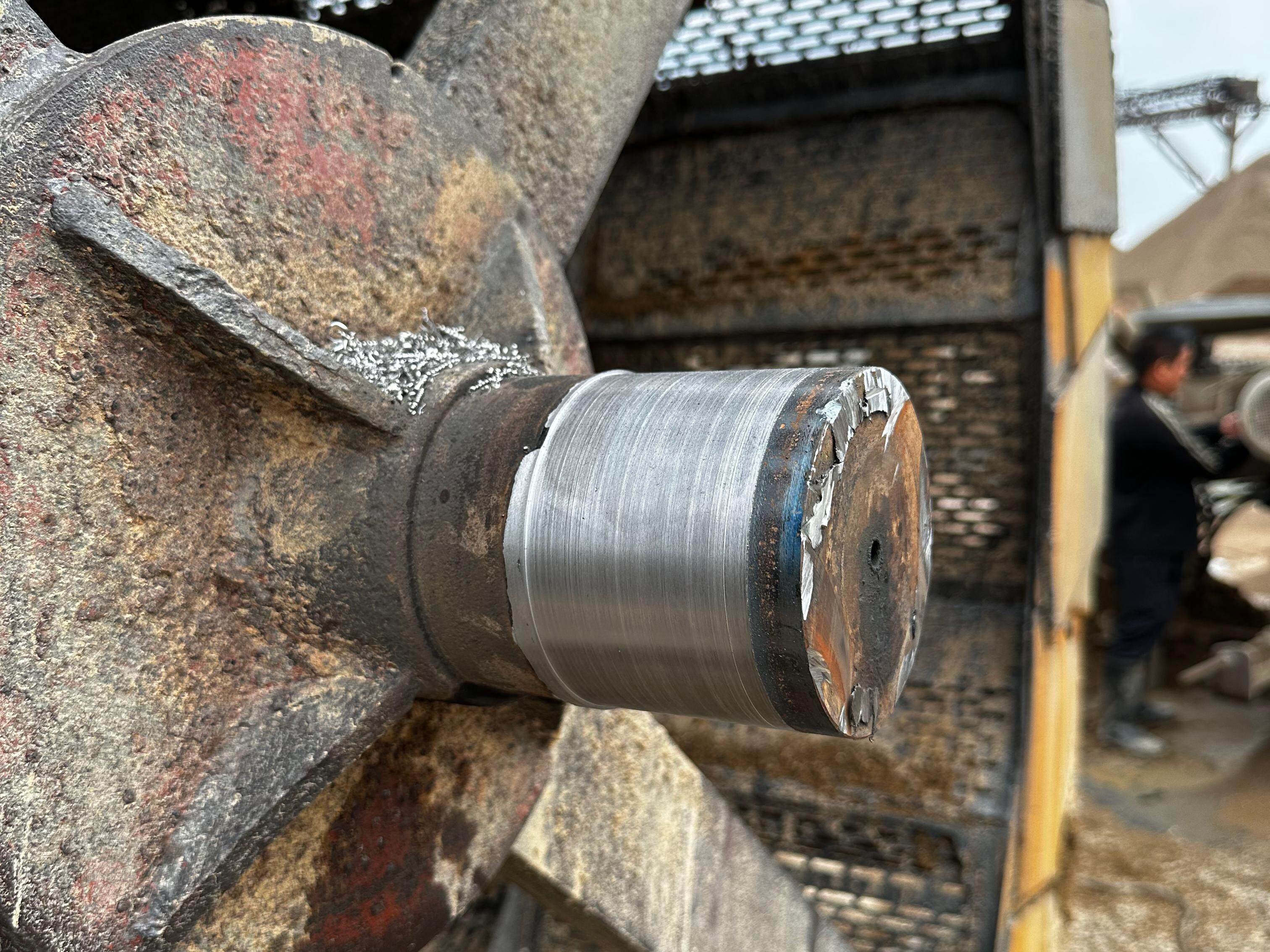
Once the deposit has cooled, the lathe turns it down. The passes stay light and the journal is measured between them, so the final diameter lands on the target instead of being chased. The finished surface comes out clean and even, which is what the bearing needs in order to seat properly.
Why the order cannot be swapped
Welding adds heat, and heat moves metal. If the journal were cut first and welded afterwards, the new deposit would sit on a surface already sized for the bearing and the cut would have to be repeated. Building up first and cutting second keeps a single reference and one measurement chain.
Finish and the mating part
A restored journal is only half of the joint. The bearing or bushing that runs on it is inspected at the same time: if it has taken the same damage it is replaced, so the pair goes back into service matched rather than with one worn part running against one new part.
Equipment this flow suits
Fans, excavators, loaders and similar heavy equipment all carry shafts that are slow to remove and expensive to transport. When the damage is deep enough to need welding, doing both operations at the machine keeps the downtime to a single visit.
|
|
What the crew checks before the cut
Two things are confirmed while the machine is still set up. First, that the deposit is thick enough across the whole worn band, not only at its deepest point. Second, that the journal is measured at several positions around its circumference instead of at one spot, because a single reading can hide an oval section, and an oval section is exactly what the bearing complained about in the first place.