S Power Portable Line Boring Machine Pivot Bore and Rotary Drive Repair
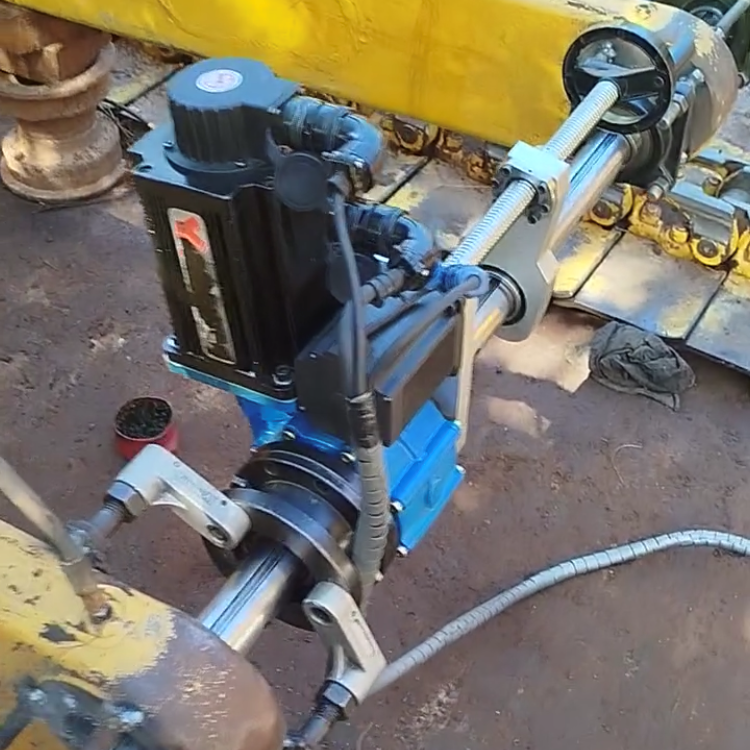
The bore is the seat, not the repair
A reworked pivot bore only restores the seat. The joint comes back to life when the parts that run in it are in condition: pin, bushings where fitted, and on this repair the rotary drive assembly that had taken the same wear. Replacing the bore and reusing a worn drive leaves the play in place, just moved to a different interface.
Why the drive was renewed
The rotary drive had been running against a bore that was no longer round, so its own bearing surfaces had taken the same hammering. Once the bore was machined back to the original axis, fitting a renewed assembly was the only way to close the joint properly. That is the sequence: measure, machine, then fit new parts to the corrected geometry.
Assembly is where tolerance is proven
Factory assembly tolerance is not a number on a drawing, it is what the joint does when it is put together. The pin goes in by hand, the drive seats without shimming to compensate, and the joint moves through its travel without catching. If a shim is needed to take up space, something upstream is still out of position.
Listening for the result
Play and abnormal noise were the two symptoms the operator reported, and both are checked the same way they were noticed: cycling the joint slowly and listening. A joint that still knocks after a bore repair usually has a worn pin, an undersize bore, or a mating part that was not renewed.
What to record
The finished bore size, the pin size, the parts renewed and the clearance measured at assembly. That record is what lets the next inspection separate normal wear from a repeat of the same fault.
The point of the exercise
Restoring a joint to factory tolerance means the machine goes back to its original working precision rather than to a workable compromise. That is a different target from a quieter knock, and it is the one worth measuring against.
How the bore itself is checked: arm bore, pin and bushing inspection.
What the operator hears after start-up
The first cycles after assembly are run at low load with the operator standing at each end of the travel, listening rather than watching. Grease is pumped and watched for distribution across the bore, because a joint that takes grease evenly is a joint that was fitted evenly.