S Power Portable Line Boring Machine: Sequencing Multiple Bores
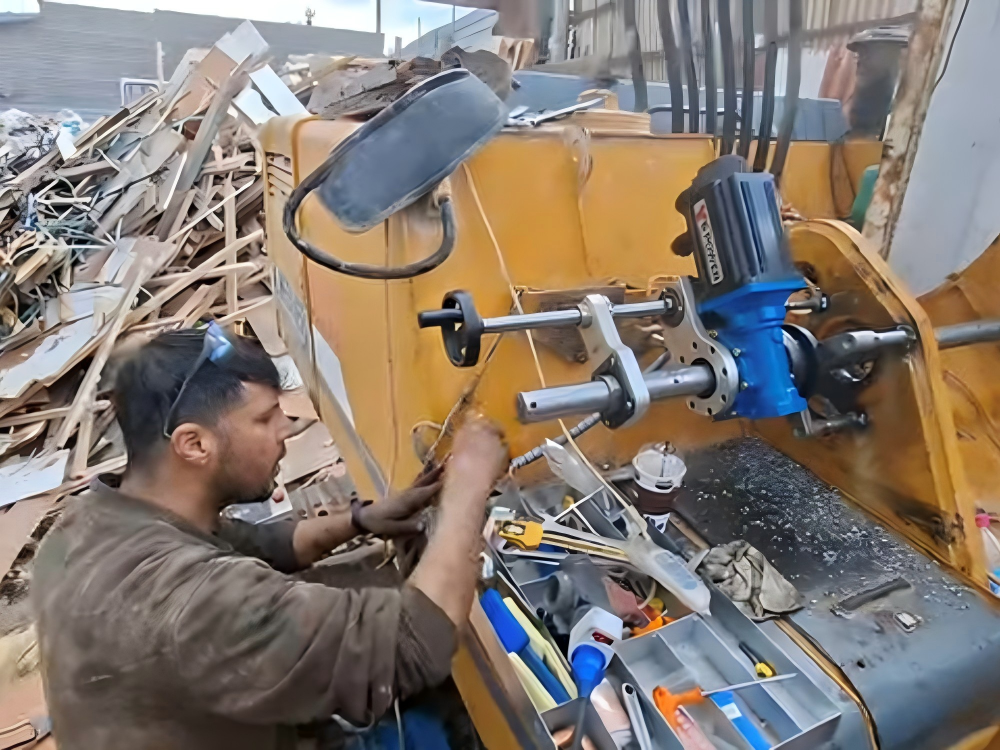
One machine, several worn joints
An excavator that has worn one hinge bore has usually worn the ones either side of it. The boom-to-stick joint, the stick-to-bucket joint and the linkage pins all take load from the same digging cycle, so a crew that comes out for one bore often finds two or three that need work. The visit is planned around that fact rather than around a single hole.
Start with the bore that sets the reference
The first bore cut should be the one in the best condition, because it establishes the axis the others are measured against. Cutting the worst bore first means working from a surface that has already lost its shape. Once the first bore is round and on size, the rest can be checked against it with a straight pin or a bar.
When the setup can stay
Bores that share a mounting face are cut without moving the brackets: the bar is advanced, the bearing seats repositioned and the cut continues on the next hole. That is the cheapest sequence, because the alignment work is done once. Bores on the opposite side of the arm need a fresh setup, which is why the order matters when time on site is limited.
Weld before you move
Where a bore needs overlay welding, the welding is done on all the affected holes before the first cutting pass. Weld heat moves metal, and a bore that was cut before its neighbour was welded will need measuring again. Doing the welding first keeps the machining sequence undisturbed.
Pin clearance is the target, not the diameter
Each joint is finished to the pin that runs in it, and the pin is checked before the bore is closed. A hole that measures on size but leaves the pin rocking will knock again within weeks. The crew confirms clearance by hand before moving to the next bore, so a problem is found while the setup is still in place.
What the plan saves
One mobilisation, one alignment chain and one measurement record for the whole set of joints. Compared with calling the crew back for each bore, the saving sits in setup time and in the number of times the machine has to be parked, not in the cutting itself.
Earlier in this series: why these bores wear oval.