S Power Portable Line Boring Machine: Excavator Arm Bore Wear
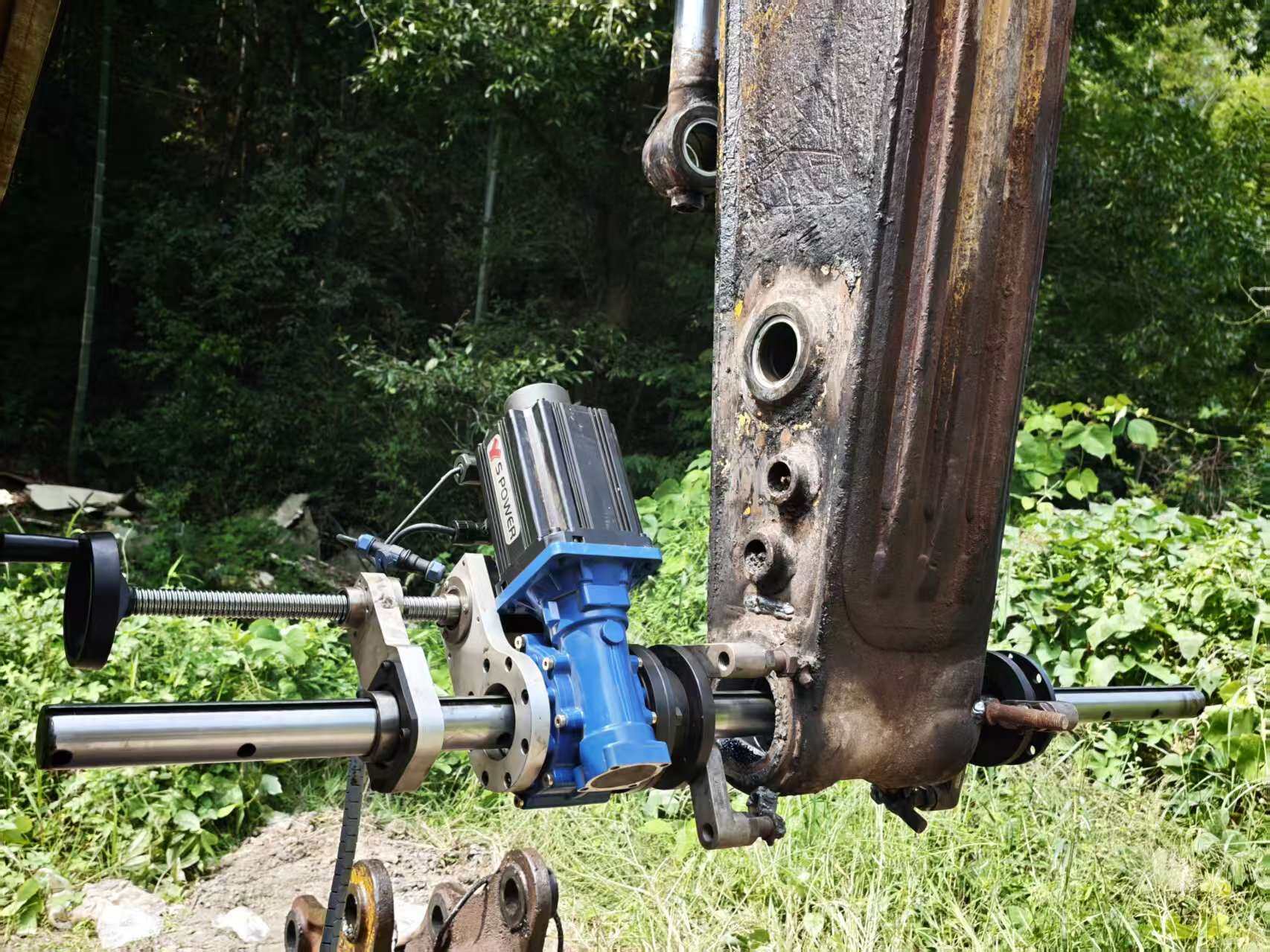
Where the wear starts
An excavator arm pivots on pins, and every bucket load passes through those joints. Pin and bore are a fitted pair with a small running clearance. Once that clearance grows, the load stops spreading across the bore and begins hammering one side of it. That is why the hole turns oval instead of wearing evenly around its circumference.
Symptoms appear before the measurement
Operators usually notice play at the stick first, then a knock when the arm changes direction, then grease that will not stay in the joint. By the time the knock is audible, the bore is normally out of round and the pin is worn with it, so fitting a new pin alone will not restore the joint.
What the bore has to become
The repair target is a round bore sitting on the original centreline, sized for the pin that will run in it. The cut therefore has to be referenced to the true axis of the bore rather than to the worn surface. Follow the worn side and the new hole keeps the error, which is how a repair can look correct and still develop play again.
Deep damage is welded first
Where the wear has taken the bore past the size the pin needs, the surface is rebuilt with overlay welding before any cutting begins. The deposit goes around the worn area, is allowed to cool, and is then bored back to size. Working this way keeps the repair inside the original casting instead of moving the joint to a new position.
Why the work happens on the machine
Removing the arm means separating the pin joints, lifting, transport, a workshop slot and a reassembly with fresh alignment. The boring unit mounts on the arm and cuts from the joint itself, so the geometry that has to be restored is also the geometry used as the reference. That is the practical argument for in-place work on this joint, and it is why the machine can be back in the cut within a shift rather than a week.
When the bore cannot be saved
If the lug is cracked through the casting, or the wall has thinned past what a bore can hold, welding and machining will not recover it and the lug has to be replaced. That check belongs before the setup, not after the first pass.
Next in this series: how the job is set up when the machine stays in the field.