S Power Portable Line Boring Machine Large Hinge Bore Logistics
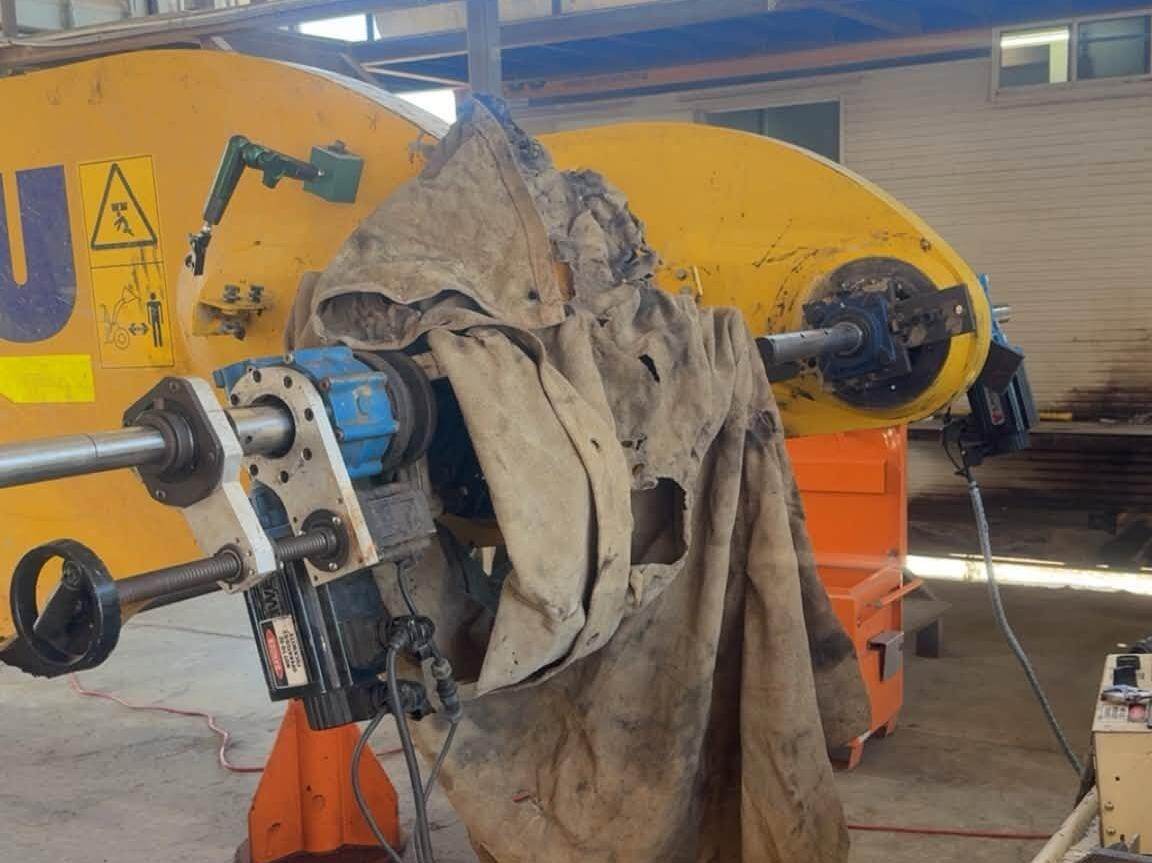
The repair is a logistics problem first
On a large wheel loader the hinge bore is a small feature on a very large assembly. What decides the route is not the machining: it is how the part gets out of the pit, onto a trailer, into a shop and back again. Each step has its own equipment and its own waiting time.
What removal involves
Separating the linkage means pins out, a crane of adequate capacity, lifting points designed for maintenance rather than for shipping, and a transport arrangement that matches the width and weight of what is being moved. The reassembly then repeats the same work with a fresh alignment on top of it.
What the shop adds
A shop slot is a queue, and the queue does not care that the machine is the main loader on site. While the part waits, the equipment stands, and the production loss usually exceeds the machining cost by a wide margin. That arithmetic is why in-situ repair gets considered on machines of this size.
What the site must provide
The joint has to be reachable with the machine parked, the ground under it has to hold the machine without settling, and there must be power at the joint and light to work by. Two people are needed, one cutting and one measuring. If any of those is missing, the in-situ route is not actually available, however attractive it looks on paper.
Large bores, same principle
A bigger joint does not change the method. The bar is supported on both sides, the cut follows the bore axis, and weld build-up is done before the cutting pass. What changes is the size of the bar, the length of the passes and the time each measurement takes.
When the shop still wins
If the casting is cracked, the boss is deformed or the bore has broken into a cavity, an in-situ pass only exposes the damage. On a machine this size the honest answer is sometimes that the assembly comes out, and finding that out during inspection is cheaper than finding it mid-cut.
Related: bucket ear plate bores and coaxiality.
The number that decides it
Set the days the machine stands against the days the repair takes. Both routes machine the same bore, and both finish to the same fit. What separates them is handling: pins, lifting, transport and a second alignment on the way back. On large equipment that handling is almost always the larger figure.