S Power Portable Line Boring Machine in Field Arm Boring
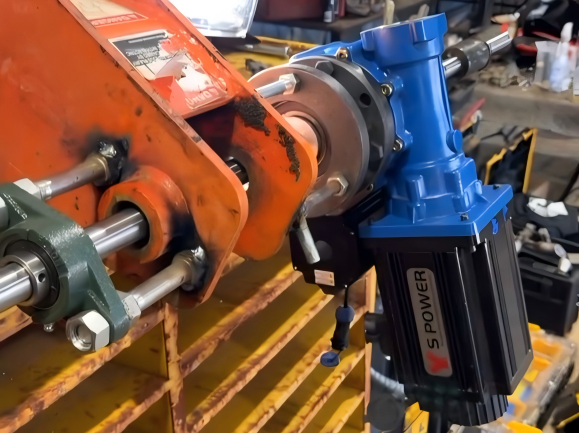
A workshop job, done in a yard
Field boring moves the machine to the equipment, and with it the conditions a workshop normally controls: the floor is gravel, the light is the sky, and there is no crane to reposition anything. None of that prevents the repair, but each item changes how the setup is done.
Ground and access first
The machine is parked on firm, level ground and the arm is blocked so the joint cannot move. Movement under the tool shows up later as chatter marks on the bore, and by then the pass has already been wasted. Access to the joint is checked from both sides before anything is unloaded, because a bore that cannot be reached cleanly cannot be cut cleanly.
Mounting around the joint
The unit is fixed to the workpiece around the bore and the boring bar is carried in bearing mounts on either side. Both mounts have to sit on sound metal, since a mount that shifts mid-pass distorts the hole. On a worn arm the surrounding surface is often pitted, which is why the mounting faces are cleaned back before the brackets go on.
Keeping the bar honest
After mounting, the bar is checked for run-out and the first pass is taken light. The cut is measured immediately: if the reading is not concentric, the setup is corrected before more material comes off. In the field this check matters more than in a shop, because nothing else in the surroundings is holding the alignment steady.
Dust, temperature and measuring
Boring produces fine metal and grit, and both travel. The bore is covered between passes and cleaned before every measurement. Readings are taken when the metal has cooled rather than straight after a cut, and the tool is checked for wear between passes so a dull insert does not polish the bore instead of cutting it.
Power, light and people
Site power is confirmed before the unit is mounted, and work is scheduled for daylight or floodlight. Two people are the practical minimum: one runs the cut, the other measures and watches the setup. On a large machine that division keeps the pass from being interrupted, which is where most field errors come from.
What the field setup cannot fix
A cracked lug, a bent arm or a bore that has broken into a cavity is not a field repair. Those need a workshop or a replacement part, and identifying them early is what keeps a one-day job from turning into a week.
Read first: why excavator arm hinge bores wear oval.