S Power Portable Lathe PL50: On-Site Shaft Turning Decision
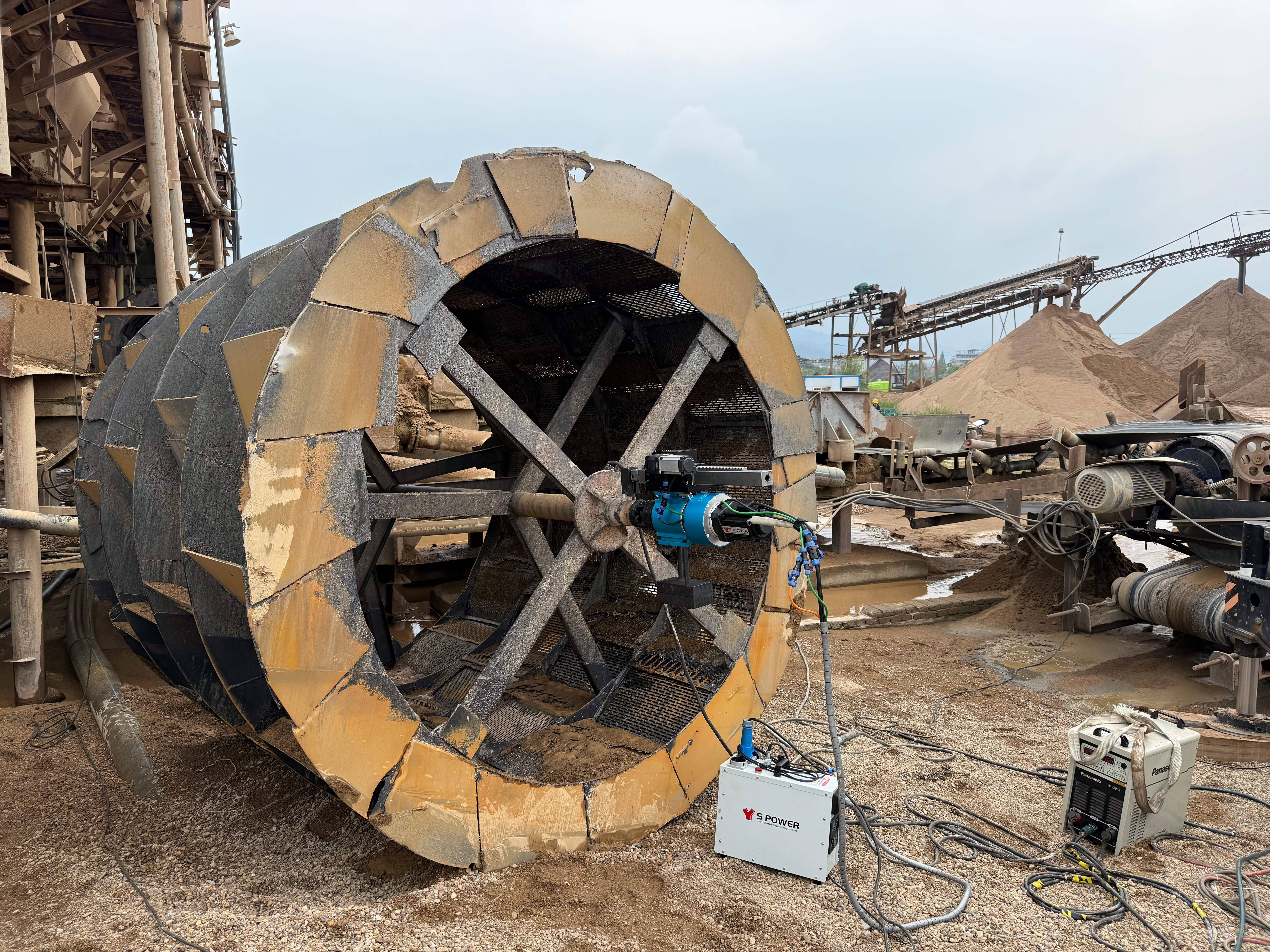
The decision behind every shaft repair
Once a journal is worn, maintenance teams face two routes: turn the shaft in place, or remove it and send it to a workshop. The second route is familiar and the first is not, so the familiar one often wins by default. Four checks make the comparison concrete.
Check one: can the shaft stay where it is
An in-place cut needs access to the worn band and a stable mounting point. The PL50 bolts to the shaft itself or to a bracket on the frame, so the entry requirement is physical access rather than a disassembly plan. If the surrounding structure blocks the tool, this route is closed and the question ends there.
Check two: how much material has to come back
Light wear with scoring that stays within the bearing's tolerance can be turned down directly. Deep damage means the surface has to be rebuilt with overlay welding first and cut afterwards. Both are possible with the unit mounted; what changes is the time spent on site, not the equipment list.
Check three: the real cost of a teardown
Removing a shaft pulls in couplings, lifting gear, transport, a workshop slot and a reassembly with a fresh alignment. Each of those steps carries its own labour hours and its own delay. Set against that chain, a single visit by two people on site is usually the smaller commitment.
Check four: spares and machine time
Where a spare shaft or rotor sits on the shelf, swapping may be the faster answer and the removed part can be repaired later. Where no spare exists, or the workshop queue is long, the machine stays idle for the whole cycle. That idle time is usually the largest number in the comparison.
What the PL50 needs to start
A reachable shaft, power at the machine, a mounting point and two people. The unit is bolted to the end of the shaft and set up on the machine, so nothing has to be dismantled before the first cut.
A rule of thumb
If the shaft can be reached, the wear is a surface condition and the machine would otherwise stand idle waiting for a workshop slot, turning in place is the shorter route. If the shaft is bent, cracked or out of reach, removing it is the right call.